Feeling pulled in a hundred directions? Give your hands a simple job and your mind a break. Mindfulness is paying kind attention to the moment you’re in and letting everything else go. Coloring is playing with lines and color. Put them together and you get mindful coloring. It’s a calm, creative way to ease stress in just a few minutes.
You don’t need talent, fancy supplies, or a big block of time. A pen, a couple of pencils, and a small page are plenty. Get ready, we’ll show you what mindful coloring is, why it helps, and how to start with a quick five‑minute practice. You’ll learn easy styles to try, simple tools that make it feel good, and gentle tips to build a tiny daily ritual that actually sticks. The best part? When you’re done, you’ll have a small, colorful page that feels like a gift you made for yourself.
Some links in this post are affiliate links. This means I may earn a small commission — at no extra cost to you — if you purchase through these links. Thank you for supporting this blog and helping me continue creating free content. See Disclaimer.
What is Mindful Coloring?
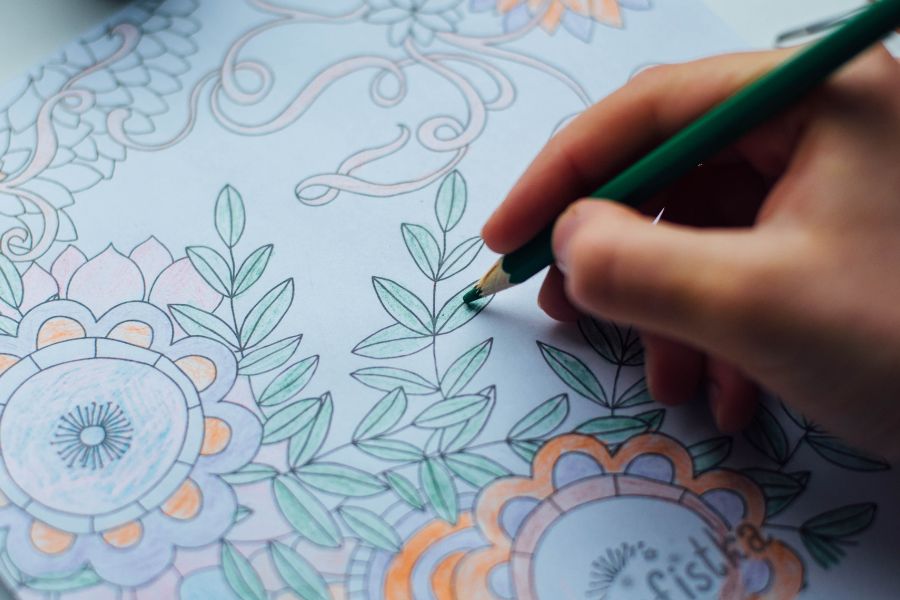
Mindful Coloring is giving complete focus to the task of coloring. Let your creativity flow as you play with lines and color, allowing all thoughts, worries, and stresses to leave you mind. In mindfulness, your aim to pay attention to one thing. Mindful coloring is so great because all your focus is on picking a color and filling a blank space. The natural rhythm is calming and meditative.
Positives of Mindful Coloring
Mindful Art vs. Mindful Coloring
Think of mindful art as the big umbrella and mindful coloring as one cozy spot underneath it. Mindful art is any creative activity you do with gentle, present‑moment attention. That could be drawing simple lines, making patterns, cutting collage shapes, even doodling. The focus is on the process, not the final picture.
Mindful coloring is a specific, super approachable version of that. You color slowly and on purpose, notice your breath and the feel of the pencil, and let the page guide you. It’s low‑prep, low‑pressure, and great when your brain feels busy because the shapes are already there.
Check Out Our Mindful Activities Guide: Learn About All the Different Ways to DO Mindfulness
Why Mindful Coloring Matters (The Benefits)
Coloring isn’t just “busy work.” When you slow down, pick a few colors, and fill one small space at a time, your breath evens out and your shoulders drop. Your hands have a simple job, and your mind gets a short, screen‑free break. That’s good for stress, focus, and even your mood. Research backs this up, too. In a small study published in the journal Art Therapy, adults who spent 20 minutes coloring a structured design—like a mandala—had a clear drop in anxiety compared with people who did free coloring (Curry & Kasser, 2005). In plain terms: gentle, repeatable shapes make it easier to settle. Mindful coloring gives you that same steady rhythm. It’s a low‑pressure way to feel calmer, think more clearly, and wind down at the end of the day—one slow stroke at a time.
How it Helps in Real Life
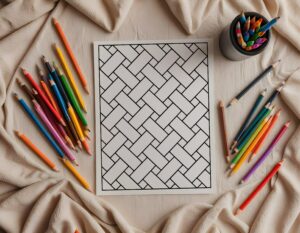
FREE Coloring Page
Relax with a simple basket weave pattern coloring page, ideal for mindfulness and coloring fun. Free in our Coloring Page Library.
A 5-Minute Mindful Coloring Practice (Step-by-Step)
Try this simple five‑minute mindful coloring routine. It’s short, steady, and easy to fit between tasks. Grab any coloring page (or doodle a few boxes), a pencil, and get started. You can do it at your desk, kitchen table, or on the couch.
Set a 5‑minute timer; pick 2–3 colors. Keep choices limited to cut decision fatigue; place the others aside so your brain can relax into the groove.
Breathe in, choose one small section. Let your eyes land on a shape you like; no perfect choice needed—just pick one patch and begin.
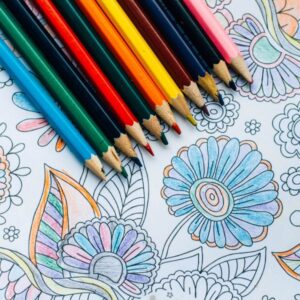
Color with slow, even strokes; match strokes to your exhale. Loosen your grip, keep pressure light, and let each pass be smooth, like brushing crumbs from a table.
When thoughts wander, notice and come back to the next stroke. Label the distraction “planning” or “worry,” then gently return to the color and the line.
End with three slow breaths; jot one word about how you feel. Calm, steady, restless—whatever shows up counts. Date it if you want a tiny log.
TIP: Stop when the timer ends—done is enough. Close the book, stretch your hands, and carry that unhurried pace into your next thing.
Choose Your Style
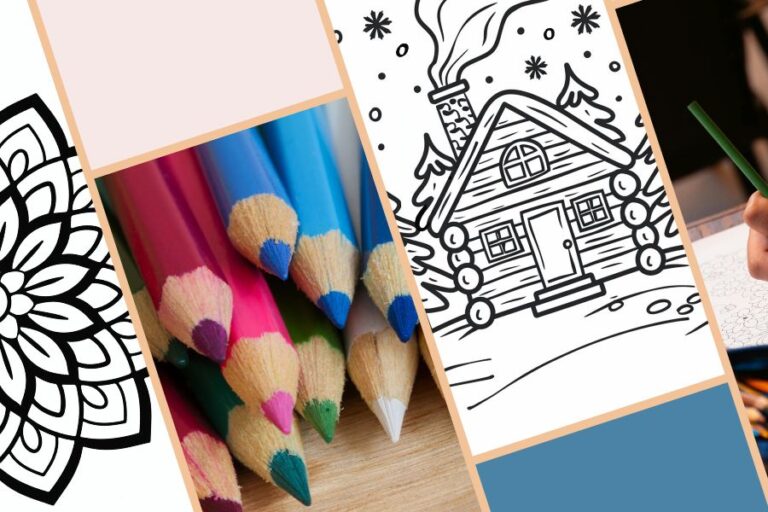
Not sure what to color? Pick a page that matches your mood and the kind of focus you want. Some designs invite slow, centering breaths; others feel playful or wonderfully simple. Try one, switch if it doesn’t fit, and let the page set an easy, steady pace. Pick ANY page from our FREE coloring page library.
Mandala Coloring Pages
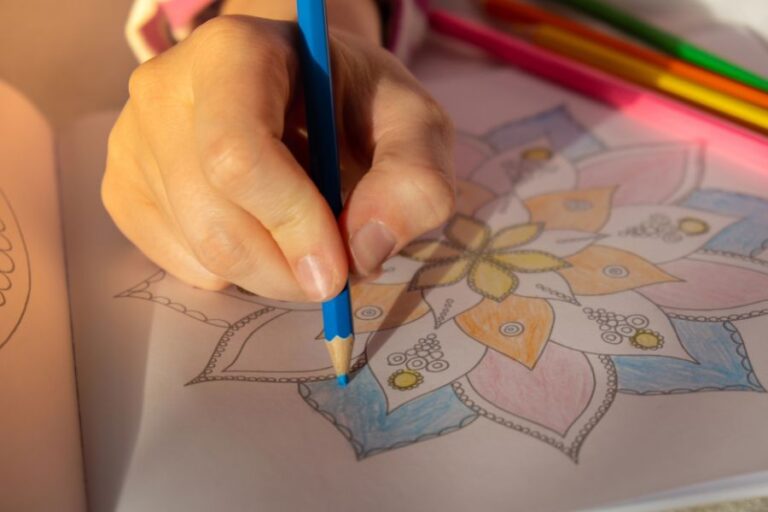
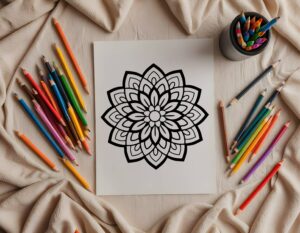
Mandala sections offer repeating curves and petals that naturally set a steady rhythm. Work one wedge at a time, breathe out as you shade, and feel your attention settle toward the center. Great for short sessions when you want quick, centering calm.
Nature Coloring Pages
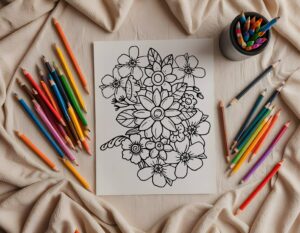
Leaves, waves, and mountains give you soft, familiar shapes that feel soothing to trace. Follow the flow of a shoreline or the veins of a leaf, layer gentle colors, and let your breath match the scene’s pace—slow, steady, and natural.
Geometric Patterns
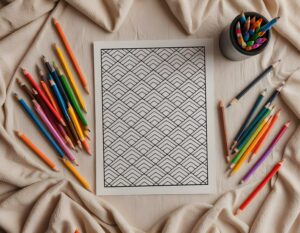
Grids, triangles, and hexagons create clean, repeatable moves that make focusing easier. Pick two colors and alternate, or build a simple sequence. The tidy edges and predictable rhythm help your mind tune out noise while your hands keep a calm, steady beat.
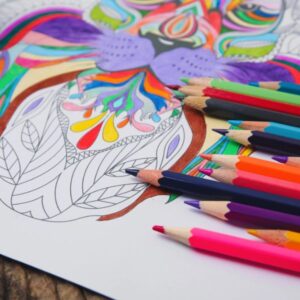
Mindful Coloring Tips: Techniques to Stay Present
Mindful coloring works best with a few gentle guardrails. Try these small tweaks to steady your attention without squeezing out the joy.
Use one technique or mix two. Keep it light, stay curious, and remember: when the timer ends, done is enough.
Is Mindful Coloring Right for You?
Not every mindful art practice fits every season of life. Here’s how mindful coloring stacks up so you can pick what supports you right now.
- Vs. Seated Meditation: Coloring keeps your hands gently busy and your eyes anchored, which can make settling easier for busy or anxious minds. It’s great for five-minute pockets when sitting still feels like a wrestling match.
- Vs. Painting/ Drawing: Fewer decisions, less mess. You can start with two or three pencils and a simple page—no palette mixing, no setup, no blank-page pressure. It’s portable, quick to pause, and easy to resume without losing the thread.
- Vs. “Regular” Coloring: The page looks the same, but the intent is different. Mindful coloring pairs attention with breath—slow strokes, 4-count exhales, brief check-ins—so the process itself becomes the practice, not the finished picture.
- Vs. Art Therapy: Mindful coloring is personal self-care and reflection, not clinical treatment. If you’re working through trauma or specific mental health goals, connect with a licensed art therapist. Coloring can still be a gentle companion between sessions.
Remember, mindfulness is supposed to fit YOU. That means your lifestyle, schedule, skill level, and energy levels. Choose the mindful activity that meets your needs.
Mindful Coloring FAQs
What’s Next?
You’ve got everything you need to start—what mindful coloring is, a few easy techniques, and how it compares to other mindful art options. Now pick what fits your time and energy today and take a small, kind step.